
Put on Your Heels and Start Taconeando
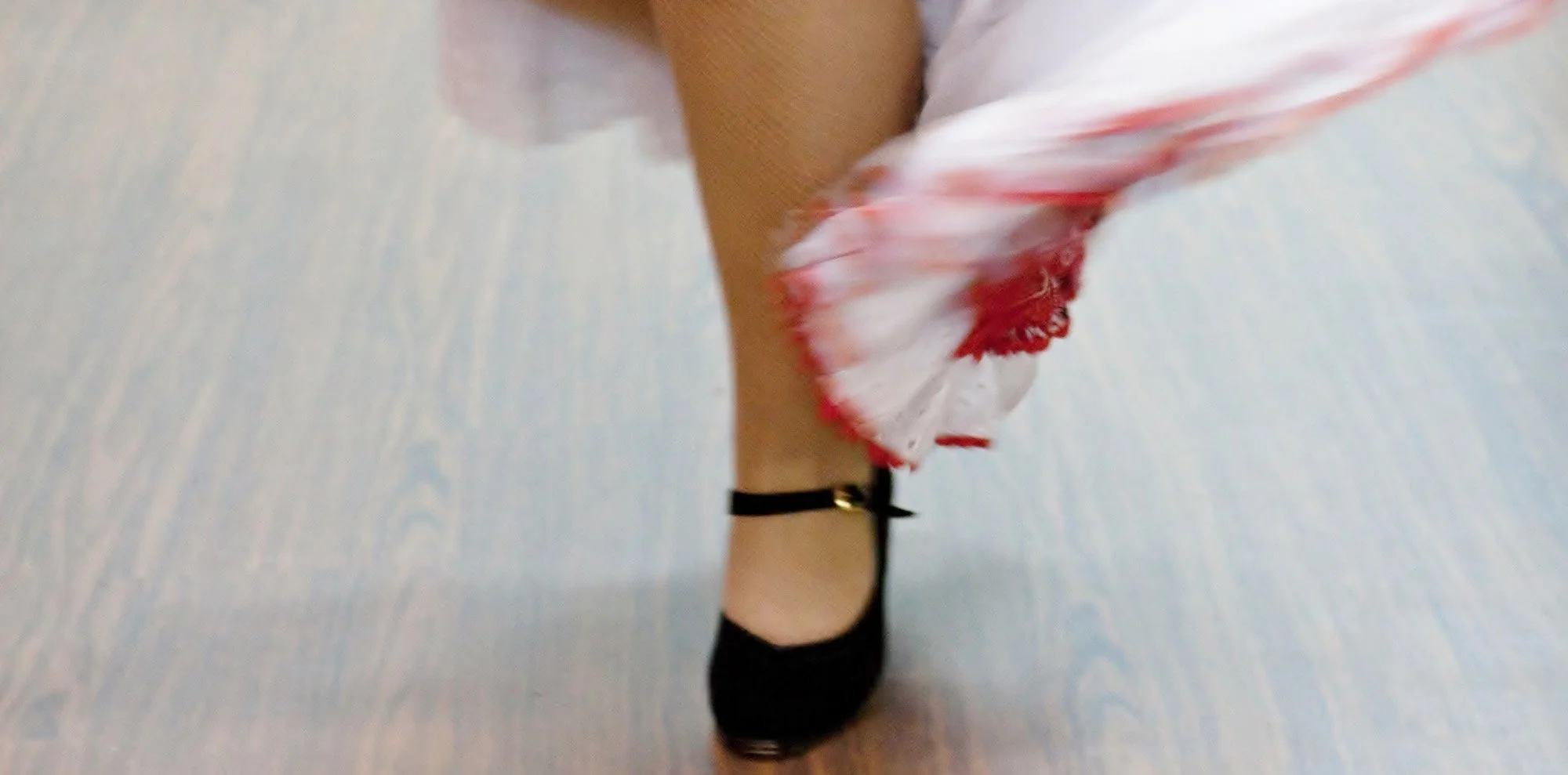
When someone begins learning Spanish dance or flamenco, the very first thing they need is a pair of heeled dance shoes. But not just any shoes. Not all flamenco shoes are the same, and they certainly do not sound the same. There is a true art behind their handcrafted construction.
The most important factor for a good sound is that the shoes are made entirely by hand. I know this from personal experience.
The first pair of flamenco shoes I bought, more than twenty years ago, were Gallardo shoes, recommended by my teachers. They were made completely to measure and fitted my feet like gloves. Black leather, with a classic 3 cm heel. I trained my entire dance career in those shoes. They endured eight hours of daily use, seven days a week. I still have them — and I still wear them.
When I bought my second pair, I returned to Gallardo. Once again they took my measurements, and this time I ordered the same model in suede. They were fantastic — there are simply no shoes that sound like them.
Later, at the beginning of a new academic year, I decided to renew my shoes again. This time, however, I did not go to Gallardo. I ended up in another shop where the shoes were not made to measure, although I was told they were handmade. I chose a pair with a higher heel — 5 cm.
When I tried them in class, something felt wrong. The sound was weak, barely audible, even though I was striking the floor with the same strength as always. I started wondering why. Could the higher heel reduce the sound or the power of the footwork?
Curious to understand the difference, I visited the Gallardo workshop. There I spoke with their manager, Maribel, who kindly explained the elements that make each flamenco shoe unique.
What makes a flamenco shoe sound good?
Handmade construction
A true flamenco shoe should be made entirely by hand. At the workshop I could see how each shoemaker carefully builds every pair using traditional techniques and great attention to detail.
The heel
The shape of the heel affects the sound. A thinner heel produces a lighter sound, while a wider heel creates a deeper, more powerful tone. The heel should also be made from solid wood. If it is not covered in leather, the sound can be even clearer.
The nails
Under the heel and toe, the placement of the nails is an art in itself. Each shoe contains more than 200 nails, and their exact positioning influences the sound the shoe will produce.
Interestingly, the best sound appears only after the nails have been worn in and polished through dancing. A brand-new pair of shoes will always sound slightly duller than a pair that has already been well used.
Maribel told me that some dancers strike the floor with such intensity that they polish the nails in just a week. If you only dance a couple of hours per week, it will take longer to bring out the full sound of your shoes. But that is part of the journey.
Watching your shoes evolve, just as you evolve as a dancer, is one of the beautiful details of learning flamenco.
So put on your heels… and start a taconeo.
¡PONTE LOS ZAPATOS DE TACÓN Y TACONEA!
Cuando uno empieza a bailar danza española y flamenco, lo primero que tiene que comprarse son unos zapatos de tacón. Pero no cualquier zapato. No todos los zapatos son iguales o suenan igual. Hay todo un arte en la fabricación artesanal de ellos.
Lo más importante para que un zapato suene bien es que estén hechos completamente a mano. Y os lo digo desde la experiencia personal. Los primeros zapatos que me compré, hace ya más de 20 años, fueron unos Gallardo, me los recomendaron mis profesoras. Fueron unos zapatos completamente a medida y eran como guantes en mis pies, de piel, negros y con tacón normal de 3 cms. Con ellos me saqué toda la carrera de danza, aguantaron cada día 8 horas de uso, 7 días a la semana. ¡Aún los conservo y los uso!
Mis segundos pares de zapatos, volví a Gallardo, me tomaron medidas, y esta vez los pedí iguales que los primeros pero de ante. ¡Fantásticos, no hay zapatos que suenen como ellos!
En el comienzo de un curso lectivo, quise renovar los zapatos, pero esta vez no fui a Gallardo, no sé por qué acabé en otra tienda que no voy a mencionar su nombre. Ya estaban hechos, no fueron a medida, pero me dijeron que sí que estaban hechos a mano. En este caso, me los compré con el tacón de 5 cms.
Estrenando los zapatos en clase no me convencía su sonido, apenas se oían, y yo seguía taconeando con la misma intensidad. Me preguntaba cuál era el problema, ¿sería que al subir la altura del tacón perdería sonido o fuerza? Como yo sola no podía responder a todas estas preguntas, fui a Gallardo, a su taller. Hablé con su gerente, Maribel, y muy amablemente me estuvo explicando las características y diferencias de un zapato u otro, que por supuesto, hacen que cada zapato no suene igual, y que el sonido de los zapatos Gallardo sea único en el mundo.
Lo primero y más importante es que el zapato esté íntegramente hecho a mano. Pude comprobar in situ, como cada zapatero construye pares de zapatos de la forma totalmente tradicional, a mano, y con un cuidado especial.
Los tacones es otro detalle a tener en cuenta. Cuanto más fino, menos sonará. Pero cuanto más ancho más varonil será el sonido de tu taconeo. Y por supuesto, debe ser un tacón de madera maciza. Si no está forrado de piel, también sonará mejor.
La distribución de los clavos debajo del tacón y de la punta tiene su arte. Cada zapato debe llevar más de 200 clavos y de su colocación depende mucho el sonido que va a tener en un futuro. El punto más álgido del sonido lo conseguirás cuando hayas machacado y pulido bien esos clavos. Un zapato nuevo sonará más sordo que cuando ya le has dado bien de caña.
Me comentaba Maribel, que hay bailaoras tan tremendas taconeando, que en una semana ya consiguen pulir bien los clavos de sus zapatos. Si tú usas tus zapatos sólo para tus clases semanales, 2 horas a la semana de media, te costará más tiempo sacarle buen sonido a tus zapatos, pero te animo a que le des con ganas, ¡es maravilloso fijarse en la evolución de tus zapatos a la vez que evolucionas tú en el baile! ¡Ponte los zapatos de tacón y taconea!