
Flamenco Festival London 2026: Six Performances, Six Artistic Voices and a Very Special Milestone
The Flamenco Festival in London is always one of the highlights of my year. Every edition brings extraordinary flamenco artists to the city and gives us the opportunity to experience the richness, diversity and constant evolution of this art form.
As a flamenco dancer and teacher, watching live performances is an essential part of my own artistic journey. It is also something I have always encouraged my students to do. Over the years, many of them have joined me at the Flamenco Festival, attending performances, discovering different artists and, very often, meeting afterwards to share our impressions.
The 2026 Festival was no exception. This year, I attended six performances at Sadler's Wells and Sadler's Wells East: six different artistic experiences and six wonderful opportunities to watch, feel, reflect and learn.
17 June – UnYDos by Jesús Carmona Company
My Flamenco Festival 2026 journey began with UnYDos by Jesús Carmona Company, with the wonderful Lucía Campillo also performing.
What a start to the Festival!
The technical level was extraordinary: precision, control and absolute mastery of movement, combined with feeling and passion. It was one of those performances where technique never overshadowed emotion; instead, the two worked together beautifully.
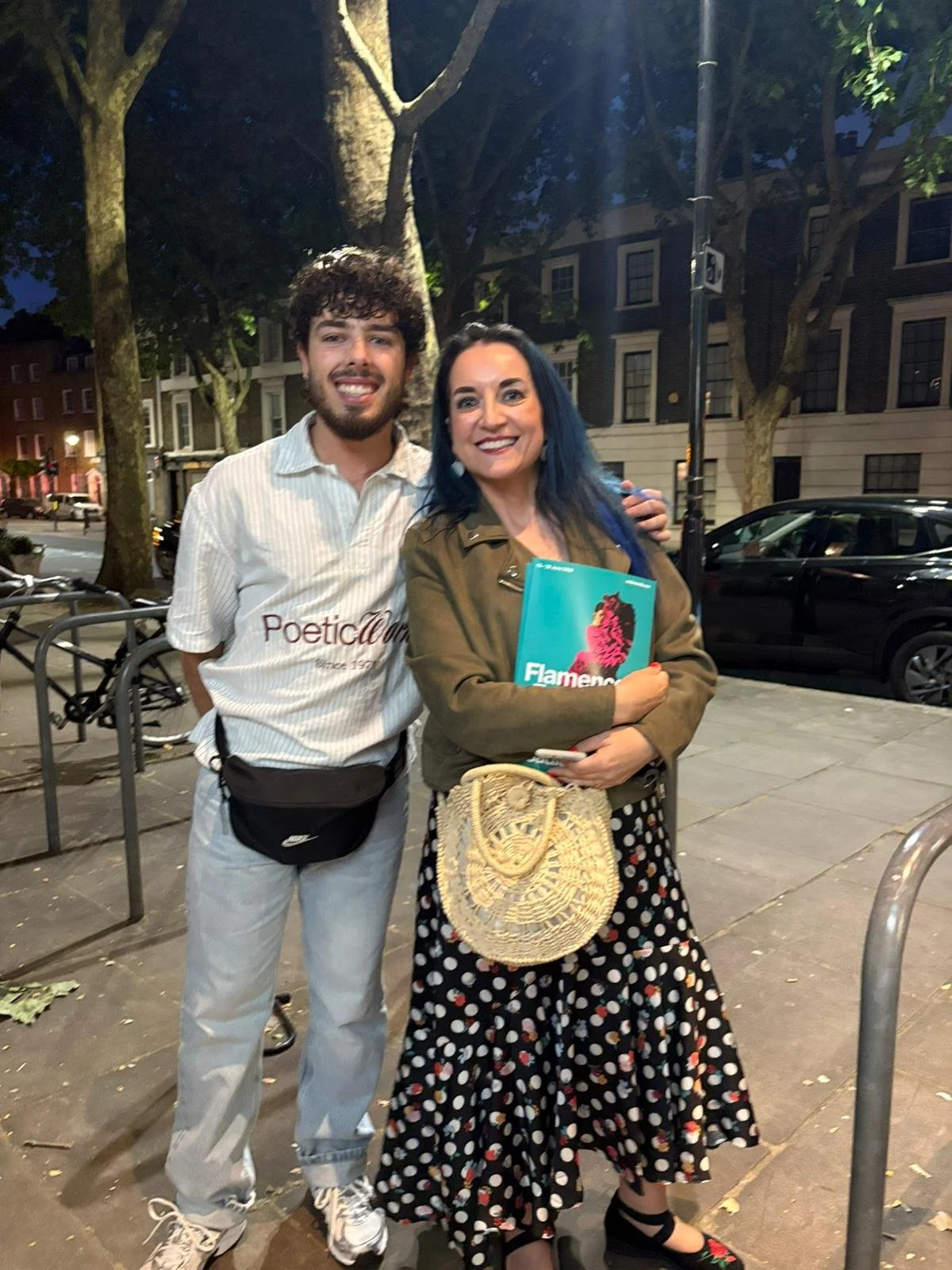
Having the opportunity to meet Lucía after the performance and congratulate her personally was a lovely way to begin my Festival experience.
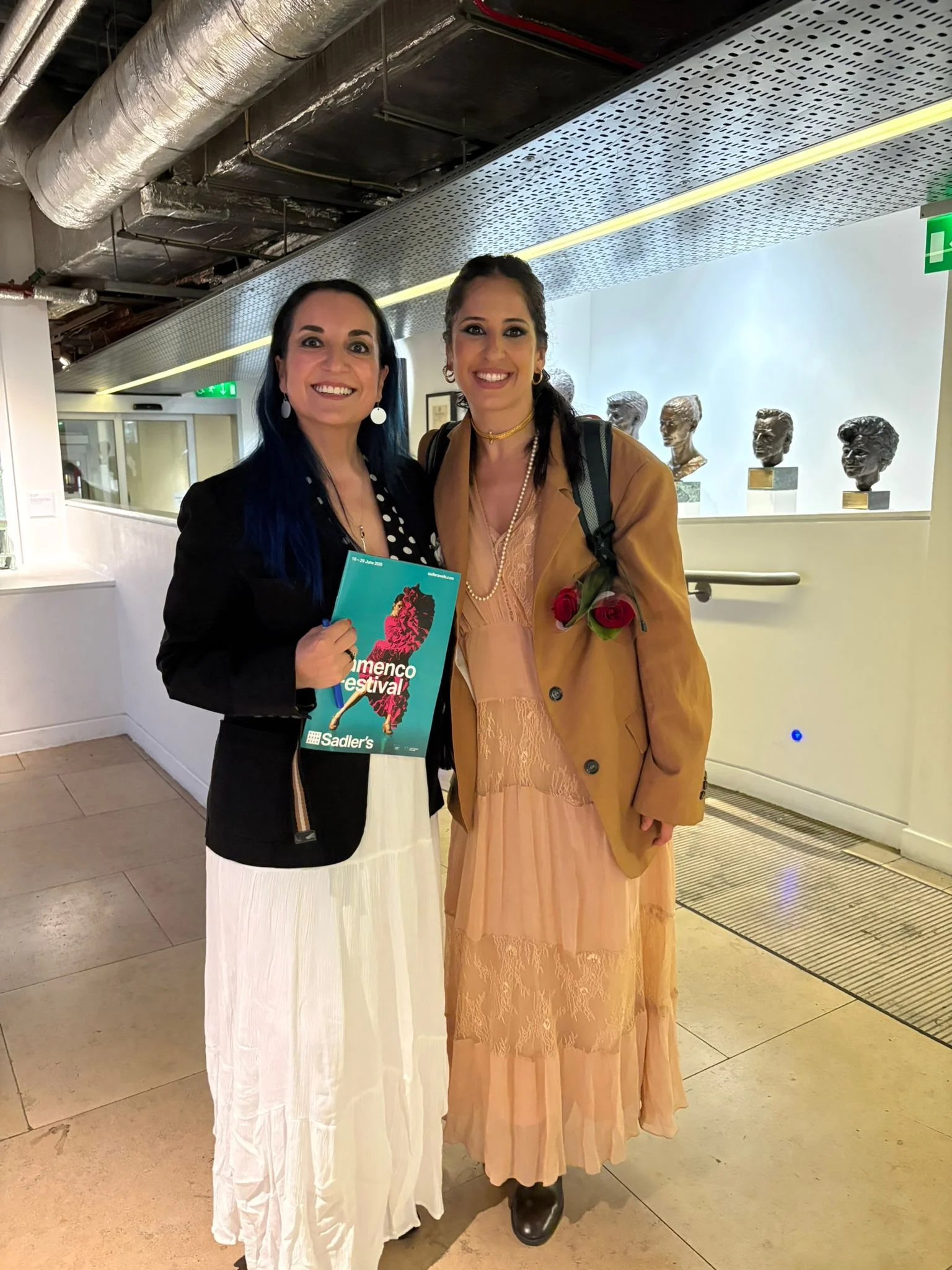
With Lucía Campillo after UnYDos
20 June – Gala Flamenca
A few days later came the Gala Flamenca, bringing together four extraordinary and very different flamenco artists: Eva Yerbabuena, Manuel Liñán, El Farru and Juan Tomás de la Molía.
What a combination of artistic personalities!
A Gala like this gives us the opportunity to experience different styles and artistic voices together on one stage. For me, this is one of the most fascinating aspects of flamenco: artists can share the same traditions and rhythmic language, yet communicate something completely unique through their bodies and personalities.
Eva Yerbabuena, Manuel Liñán, El Farru and Juan Tomás de la Molía each brought a completely different energy to the stage. Technique, individuality, strength, emotion and character came together in a wonderful celebration of flamenco.
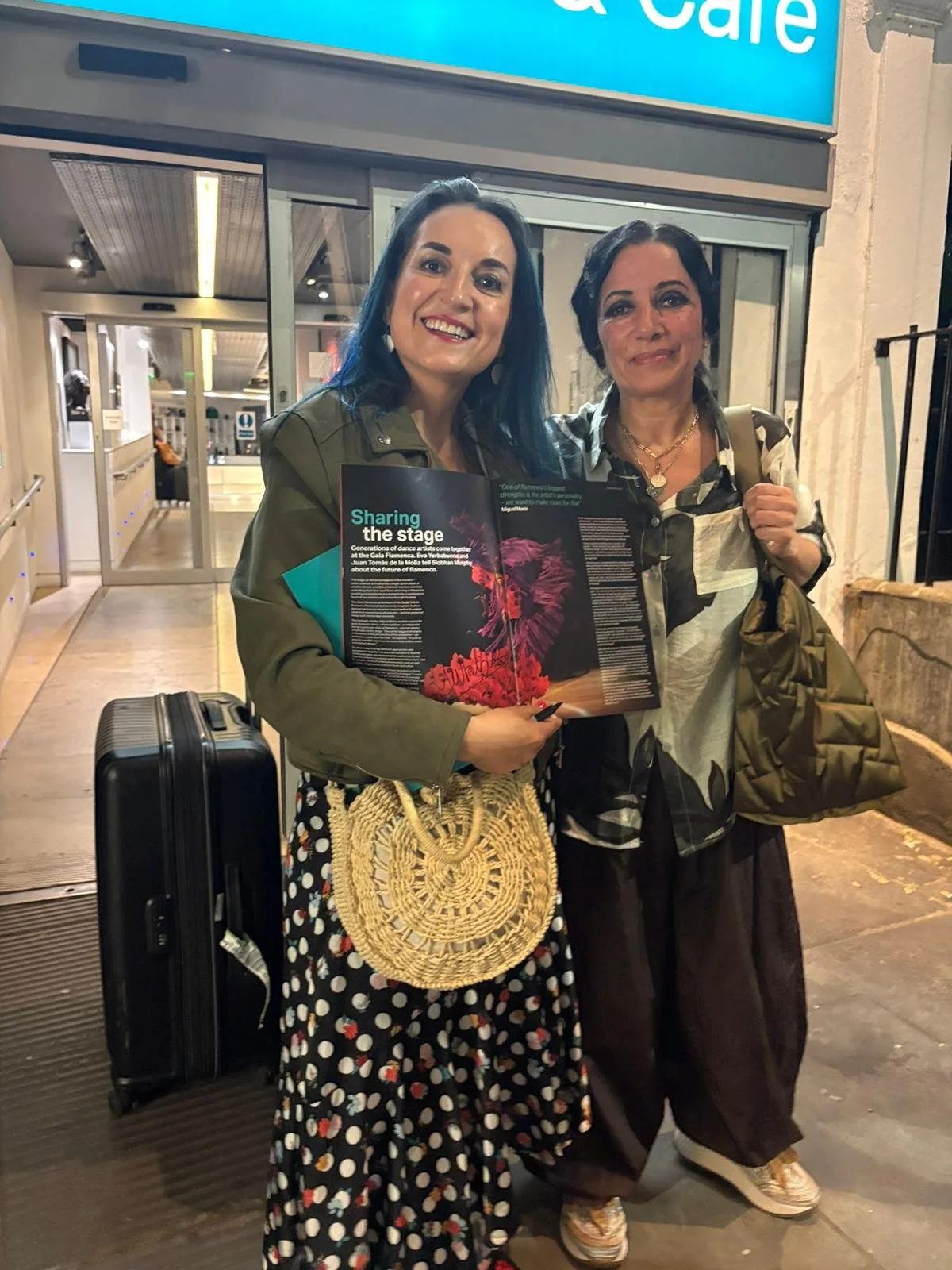
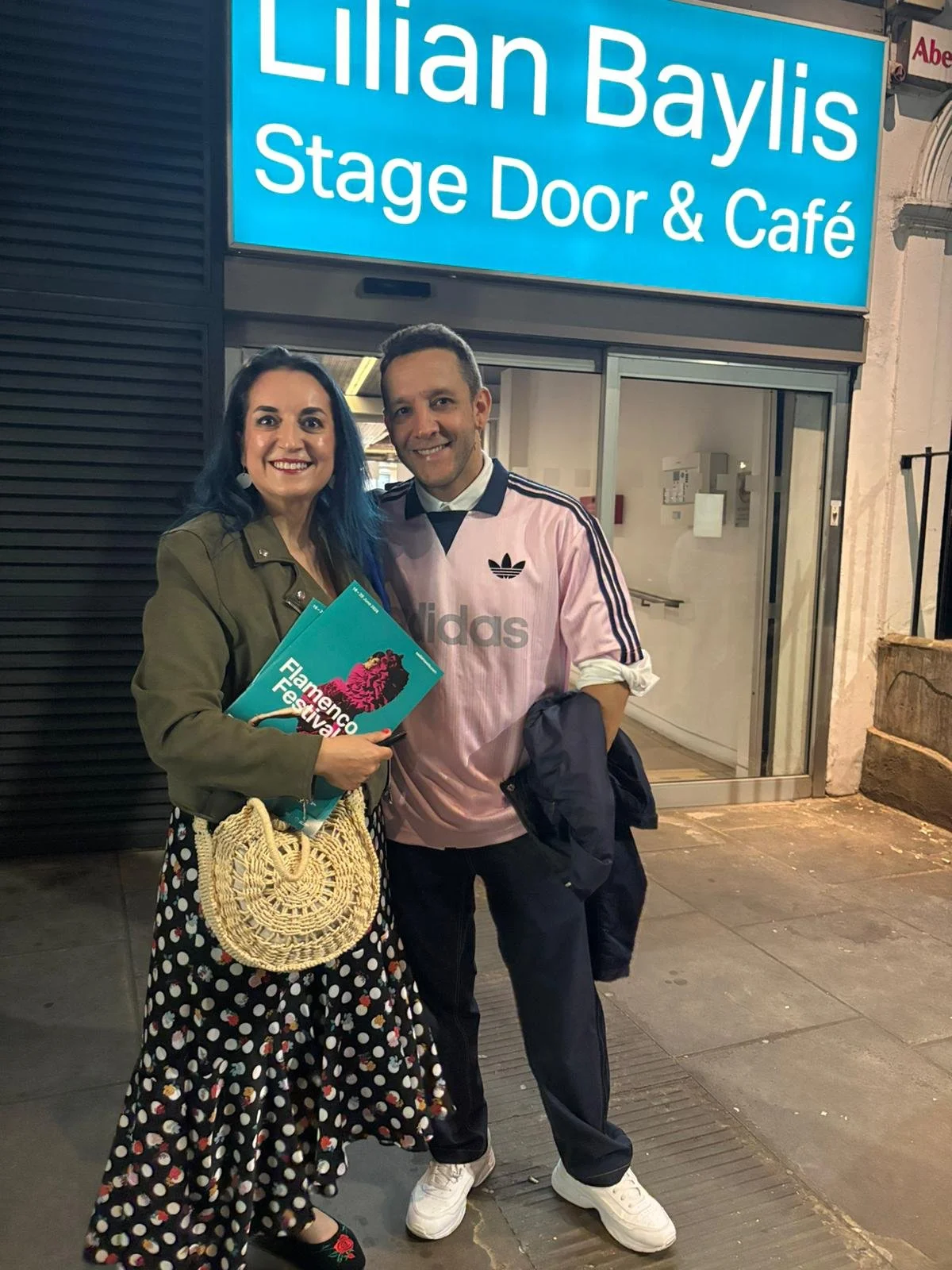
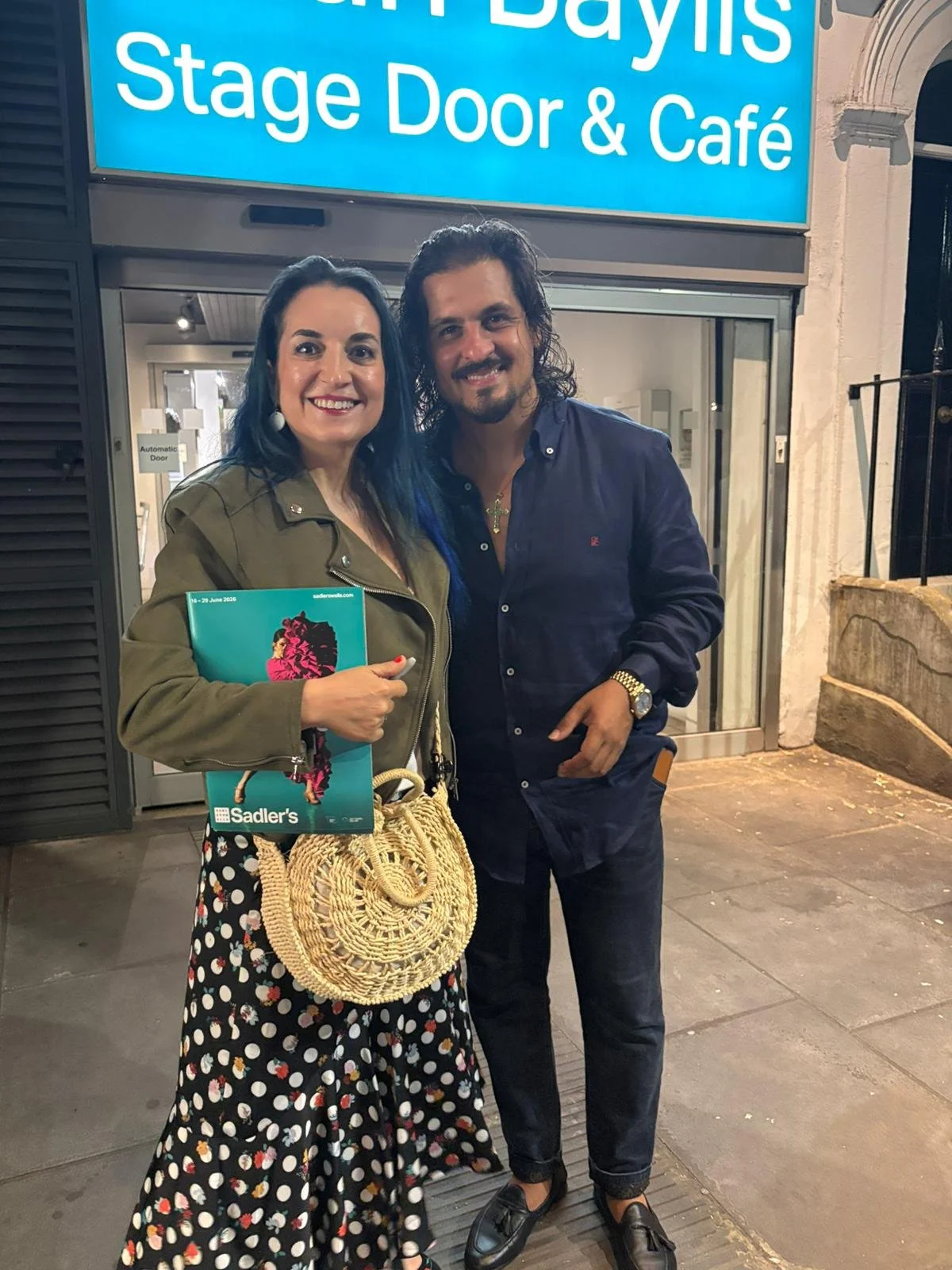
I was also very fortunate to meet the artists after the performance. Those moments of being able to congratulate them and briefly share my appreciation for their work made an already special evening even more memorable.
24 June – Calentamiento by Rocío Molina
And then came Rocío Molina.
I left Calentamiento almost speechless.
Rocío is unstoppable: a force of nature and an absolute animal of footwork. Her technique, physicality and ability to fuse flamenco with completely unexpected artistic languages are astonishing.
This was perhaps one of the performances that generated the most discussion amongst my students. We experienced a mixture of feelings and interpretations, but there was certainly one reaction we all shared: WOW!
Some of us even waited at the stage door hoping to see Rocío after the performance... but she was still dancing!
Somehow, that felt like the perfect summary of her endless energy.
27 June – Ballet Flamenco de Andalucía
The Ballet Flamenco de Andalucía, under the artistic direction of Patricia Guerrero, offered a completely different experience.
For me, the production was a beautiful homage to Andalucía, with a wonderful repertoire of palos presented with sensitivity, elegance and exquisite taste.
Patricia Guerrero is a true guerrera and an extraordinary representative of Spanish Dance and Flamenco. The richness of the programme reminded us of the immense diversity within our art form and the importance of understanding its traditions while allowing it to continue evolving.
After the performance, several of my students gathered together and we shared our thoughts about the show. Listening to them analyse the dancing, music, choreography and their own emotional reactions made me incredibly happy.
What an important step in their learning journey.
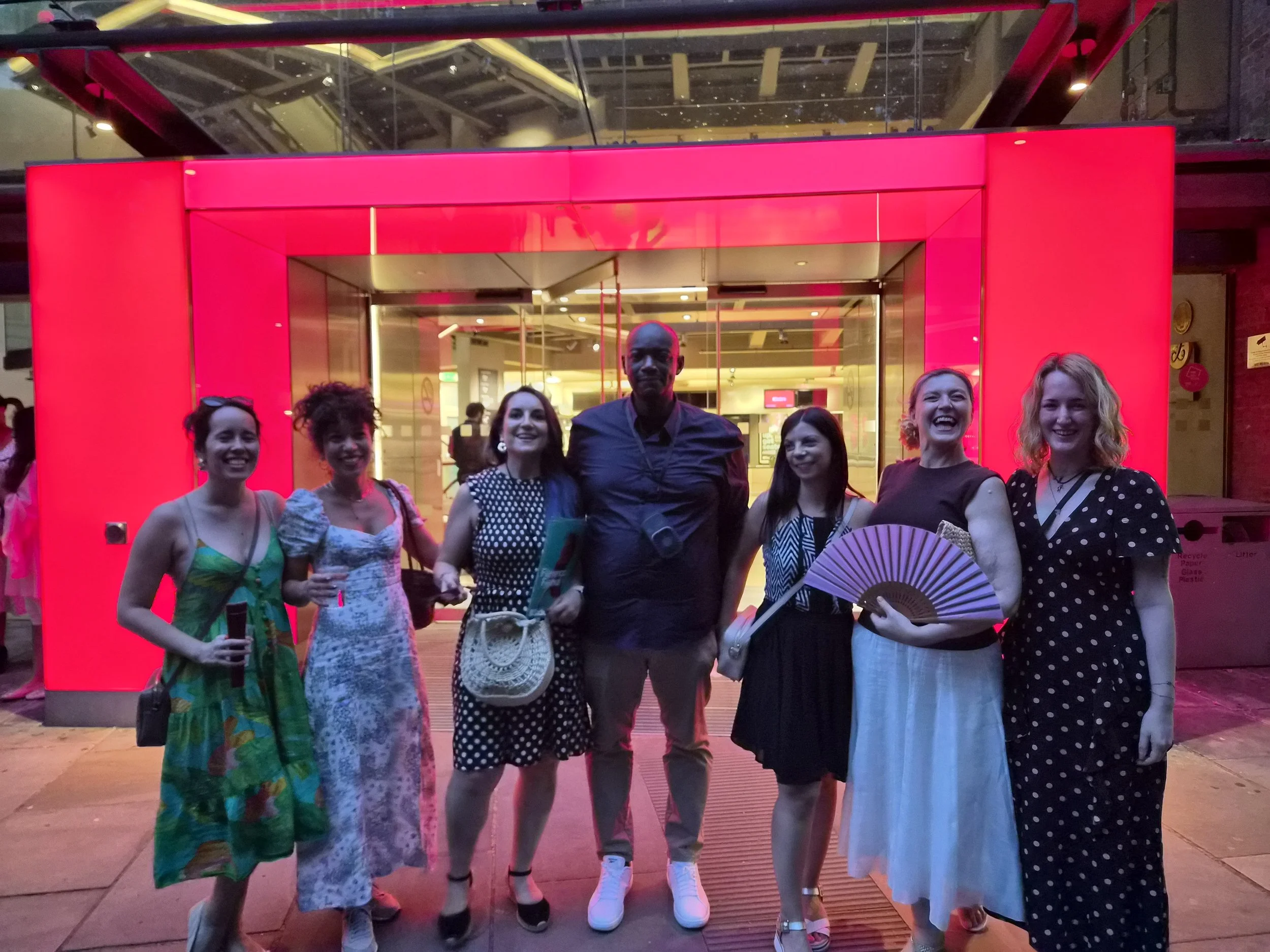
With some of my students after the show
28 June – María Moreno Company
At Sadler's Wells East, María Moreno Company captivated me with an extraordinary display of rhythm and musicality.
What particularly impressed me was the beauty of María's zapateado and the incredible dialogue between footwork and palmas. The speed, clarity and precision were breathtaking, yet everything remained elegant and deeply expressive.
Her performance was a wonderful reminder that flamenco dancers must also be musicians.
We do not simply dance to the rhythm; we become part of it.
29 June – Rayuela by Marco Flores Company
And finally, Rayuela by Marco Flores Company.
What a magnificent way to close the Flamenco Festival.
Marco's style is so clean, beautiful and precise. His dancing brings together extraordinary technique, elegance and emotion, with the richness and sensitivity of Spanish Dance always present.
I was fortunate enough to have Marco as a teacher in the past, and watching him on stage made me appreciate his artistry even more. When you have studied with an artist and experienced their teaching, you understand even better just how incredibly difficult some of what you are watching really is.
And yet, Marco makes the difficult look effortless.
That, for me, is one of the greatest signs of mastery.
A Very Special Milestone for Flamenco with Maika
This year's Flamenco Festival was particularly special for me for another reason: Flamenco with Maika was part of the official Festival programme at Sadler's Wells.
Seeing my classes, workshops, private tuition and events featured in the programme under my motto, “Flamenco for everybody”, was a very special moment.
Alongside Flamenco with Maika, the programme also featured Davedans flamenco dancewear, connecting flamenco lovers in the UK with beautiful dancewear inspired by tradition and crafted in Spain.
For me, it brought together two things I am deeply passionate about: helping more people discover and learn flamenco, and helping dancers feel beautiful and confident in what they wear.
While audiences were discovering extraordinary artists on stage, they could also find a way to continue their own flamenco journey beyond the theatre: to learn, dance, wear beautiful flamenco clothes and become part of our growing community.
Being part of the 2026 Flamenco Festival programme was a very special milestone for Flamenco with Maika, and one I feel incredibly proud of.
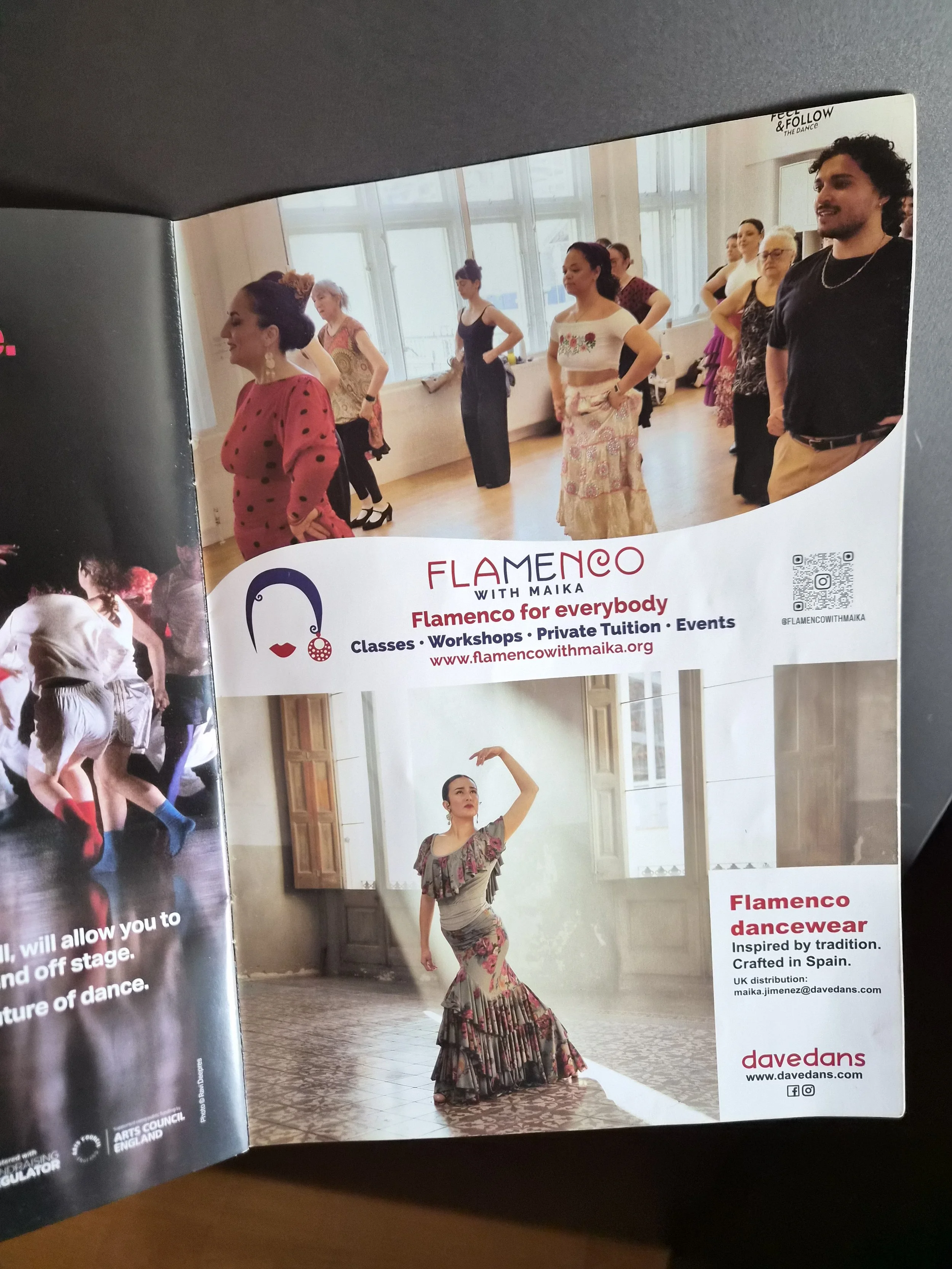
Flamenco with Maika and Davedans in the Flamenco Festival programme
Flamenco Is Also About Learning to Watch
One of the principles I have always tried to share with my students is the importance of watching live flamenco as part of a dancer's education.
Technique is developed in the studio. We practise our posture, arms, hands, footwork, turns, rhythm and coordination.
But artistry also grows by watching.
This is why, year after year, I am so happy to see my students attending the Flamenco Festival. Some join me for one performance, others attend several, but what matters is their curiosity and their willingness to experience flamenco beyond the classroom.
The conversations after the performances are part of that learning too.
We do not always agree. A production may inspire one person and challenge another. We notice different details, connect with different artists and experience different emotions.
That is part of the beauty of art.
This year's six performances demonstrated perfectly the extraordinary diversity of contemporary flamenco: the technical brilliance and passion of Jesús Carmona Company; four unique and powerful artistic personalities in the Gala Flamenca; Rocío Molina's fearless experimentation and physical power; the elegance and rich repertoire of the Ballet Flamenco de Andalucía; María Moreno's remarkable musicality and rhythmic precision; and Marco Flores' beautiful combination of technique, Spanish Dance and emotion.
Six performances. Six artistic experiences. So many conversations and so much inspiration.
As a teacher, I do not only want my students to learn choreography or steps. I want them to become curious about flamenco: to listen, to watch, to question, to feel and to develop their own artistic understanding.
Because flamenco is not only something we dance.
It is something we experience, study, share and live.
Thank you to all the artists, musicians, companies and everyone involved in bringing the Flamenco Festival to London once again.
Until next year...
¡Viva el Flamenco!
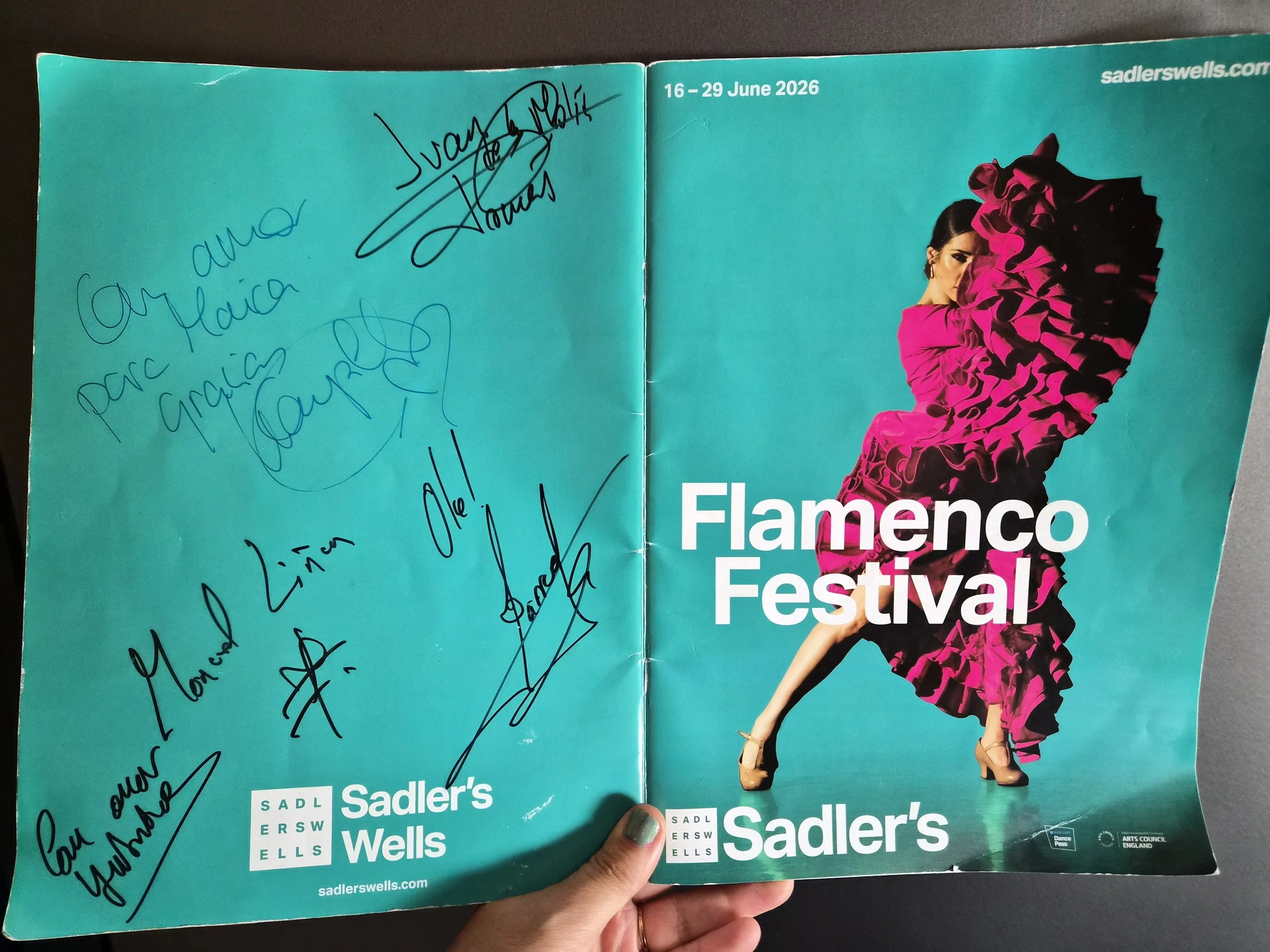
Flamenco Festival programme